
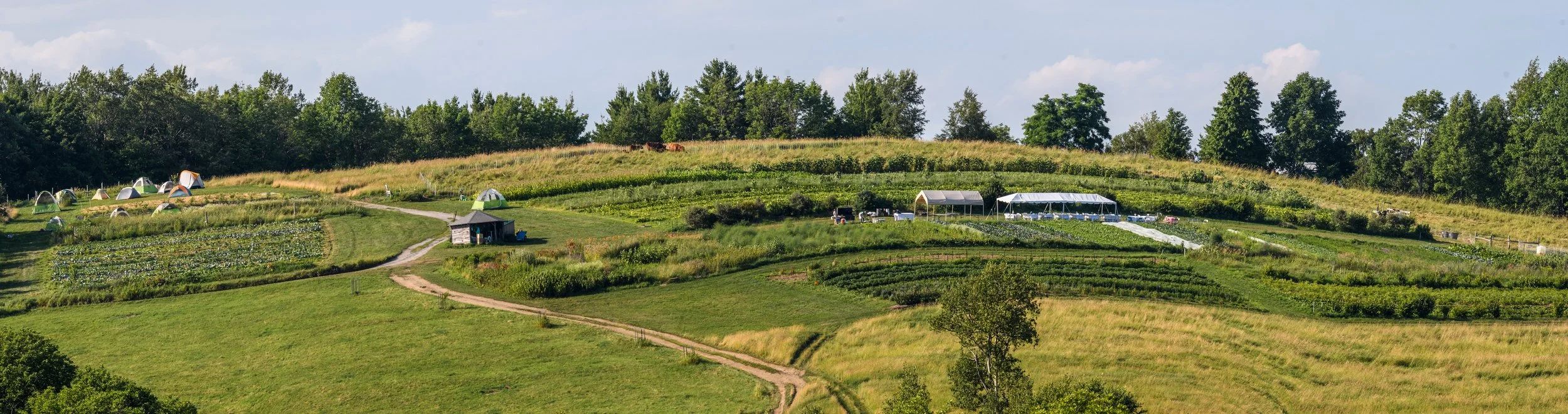
418 Acres of Working Farm and Vermont Wilderness
Our campus in Vershire, Vermont, offers groups a rare combination: the infrastructure of a boarding school with the authenticity of a working farm and the serenity of rural Vermont's mountains and forests.
The Land and Campus
The Mountain School sits on 418 acres in Vershire, Vermont, in the heart of the Upper Valley region where Vermont meets New Hampshire. Our property spans multiple ecosystems and land uses, creating diverse spaces for groups to explore and experience.
Working Farmland
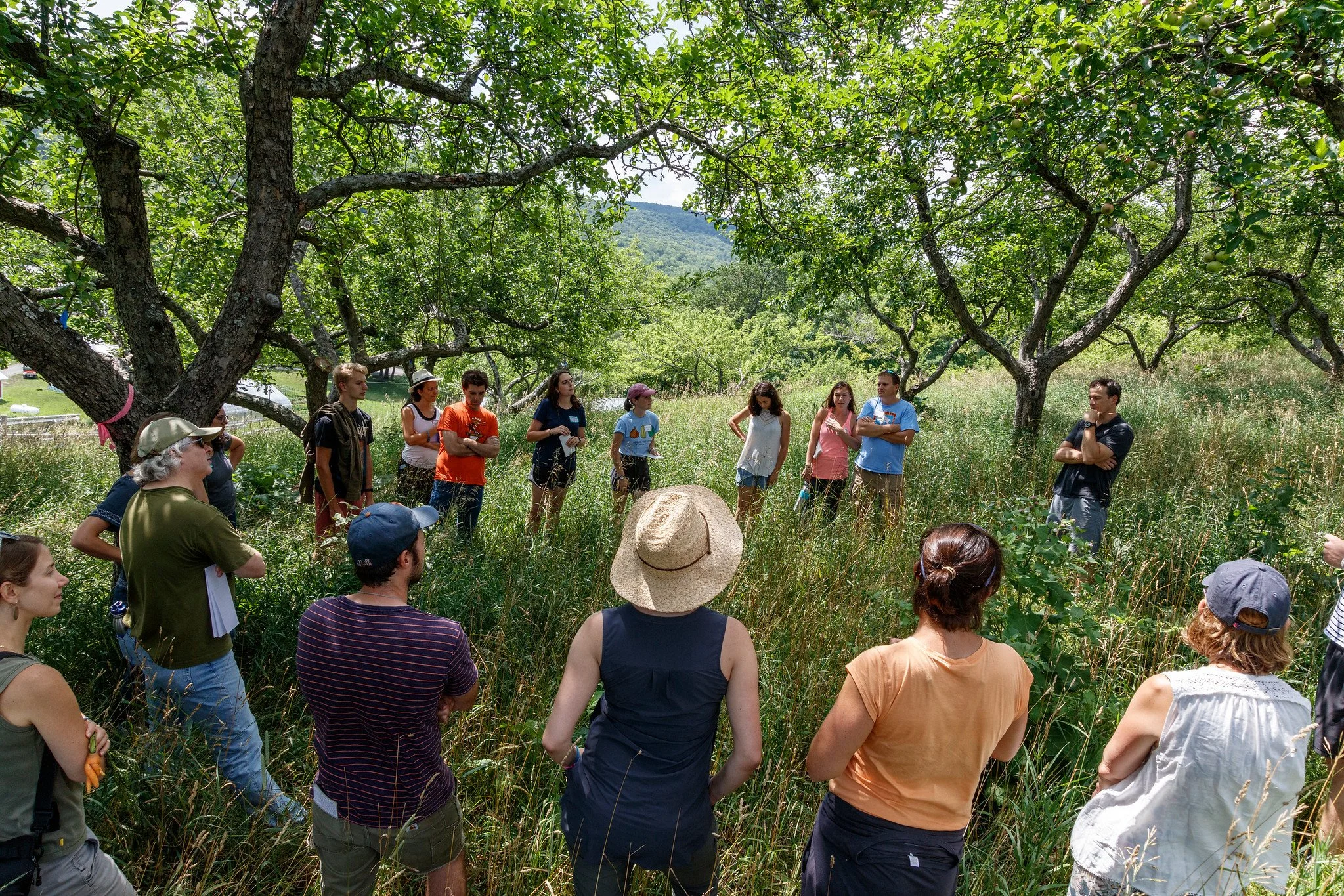
Approximately 50 acres of our property are actively farmed. Organic vegetable gardens produce food for our kitchen from spring through fall. Orchards yield apples, pears, and stone fruits. Pastures support our livestock, including sheep, chickens, and seasonal animals. This isn't a demonstration farm, it's a working agricultural operation that groups become part of during their stay.

Historic Buildings
Our campus buildings date from different eras of Vermont history. Five dormitory houses, built in the 19th and early 20th centuries, have been maintained and updated while preserving their historic character. The main academic building, dining hall, art studio, and various barns and outbuildings create a village-like campus that feels both authentic and functional.

Forest and Sugarbush
Over 300 acres of our campus consists of mixed hardwood forest, including a productive sugarbush where we tap hundreds of maple trees each spring. Miles of maintained trails wind through these woods, connecting to lean-tos, historic barns, and elevated viewpoints. The forest provides habitat for deer, moose, bear, wild turkeys, and countless bird species.

Mountain Views
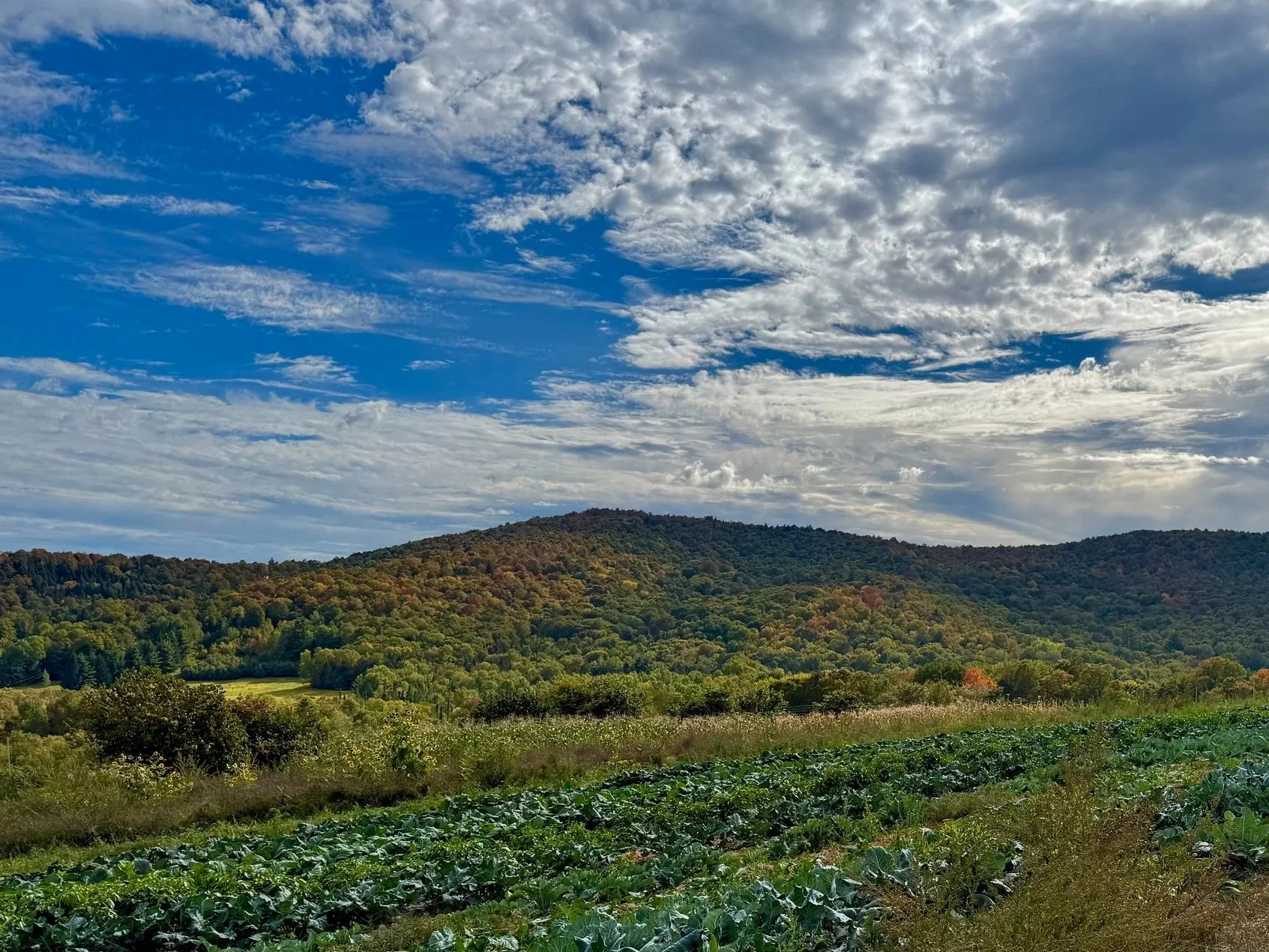
The campus offers views in multiple directions. To the west, Vermont's Green Mountains roll across the horizon. To the east, New Hampshire's White Mountains, including Mount Moosilauke, dominate the landscape. Library Hill and Garden Hill offer elevated viewpoints where groups gather for outdoor activities, reflection, or simply to take in the scenery.

Where We Are
Vershire, Vermont, and the Upper Valley provide the quiet, rural setting that shapes every experience on our campus.


Geographic Setting
Vershire, Vermont (population approximately 700) sits in the Upper Valley, the Connecticut River corridor that connects Vermont and New Hampshire.
Our campus is located on dirt roads that wind through forested hillsides and agricultural valleys. The nearest paved road is about 10 minutes away. The nearest town (Thetford) is 15 minutes away. Hanover, New Hampshire, home to Dartmouth College, is 40 minutes.
This remoteness is both practical and philosophical.
Practically, it means no through-traffic, no light pollution, and genuine quiet. Philosophically, it creates the disconnection from everyday life that groups value. You don't just drive to The Mountain School, you journey here.
The Upper Valley Context
The Upper Valley has long been known for educational institutions (Dartmouth, Vermont Law School) and progressive thinking about sustainability, agriculture, and education. Our campus sits within this tradition while maintaining genuine rural Vermont character. We're part of a region that values both intellectual rigor and hands-on work, both innovation and tradition.
Access From Major Cities
Despite our rural location, we're surprisingly accessible:
3 hours
Boston
4 hours
Hartford
5 hours
New York City
5 hours
Montreal
1.5 hours
Burlington, VT
This combination, remote but reachable, is rare and valuable for groups that want genuine disconnection without multi-day travel.
(Almost) No Cell Service. Seriously.
There is extremely limited cell phone coverage on our campus. This isn't a policy, it's geography. The nearest cell tower is miles away, and the surrounding hills block signals from more distant towers. Most phones show "No Service" or "SOS Only" within 15 minutes of arriving at campus.
• No phone calls unless using WiFi calling
• No text messages unless using WiFi messaging apps
• No social media browsing unless connected to WiFi
• No checking work email while walking between buildings
• No taking calls during breaks
What This Means
• WiFi in all main campus buildings (library, dining hall, classrooms, art studio)
• Ability to use laptops and tablets with internet access
• Emergency communication via WiFi calling or internet
• Ability to check in as needed, just not constantly
What’s Available
Why Groups Value This
Corporate teams report being fully present in strategic conversations for the first time in years. School groups watch as students who normally check phones every few minutes engage deeply with each other and their surroundings. Families find themselves having actual conversations at meals instead of everyone scrolling.
The forced disconnection eliminates the low-level distraction that diminishes most modern gatherings. You can't check your phone during the boring parts, so nothing is boring—everything becomes the experience you're here for.
Four Decades of Experiential Education


The Mountain School of Milton Academy was founded in 1984 as America's first semester school, a place where high school students could spend a semester living and learning on a working farm, away from their home schools. This made us pioneers in experiential education and place-based learning.
For 40 years, we've refined the practice of building intentional community, connecting students to land and food systems, and creating environments where people engage deeply with each other and their surroundings. That expertise doesn't disappear when semester students leave—it infuses every aspect of how we host groups during our rental periods.
When you rent our campus, you're not just renting facilities. You're accessing the accumulated wisdom of four decades of experiential education, sustainable agriculture, and intentional community building. Our staff knows how to help groups disconnect from technology, connect with nature, and create meaningful experiences together.
The Campus Through the Seasons
Summer (June - August)
The farm is at peak production. Vegetable gardens overflow with produce. Livestock graze on lush pastures. Forest trails offer shade from warm days. Library Hill and Garden Hill host outdoor dinners and evening programs. Long daylight hours mean groups can be active from early morning through late evening. Temperatures range from pleasant to occasionally hot (no air conditioning- see Facilities & Amenities).
Spring (March - May)
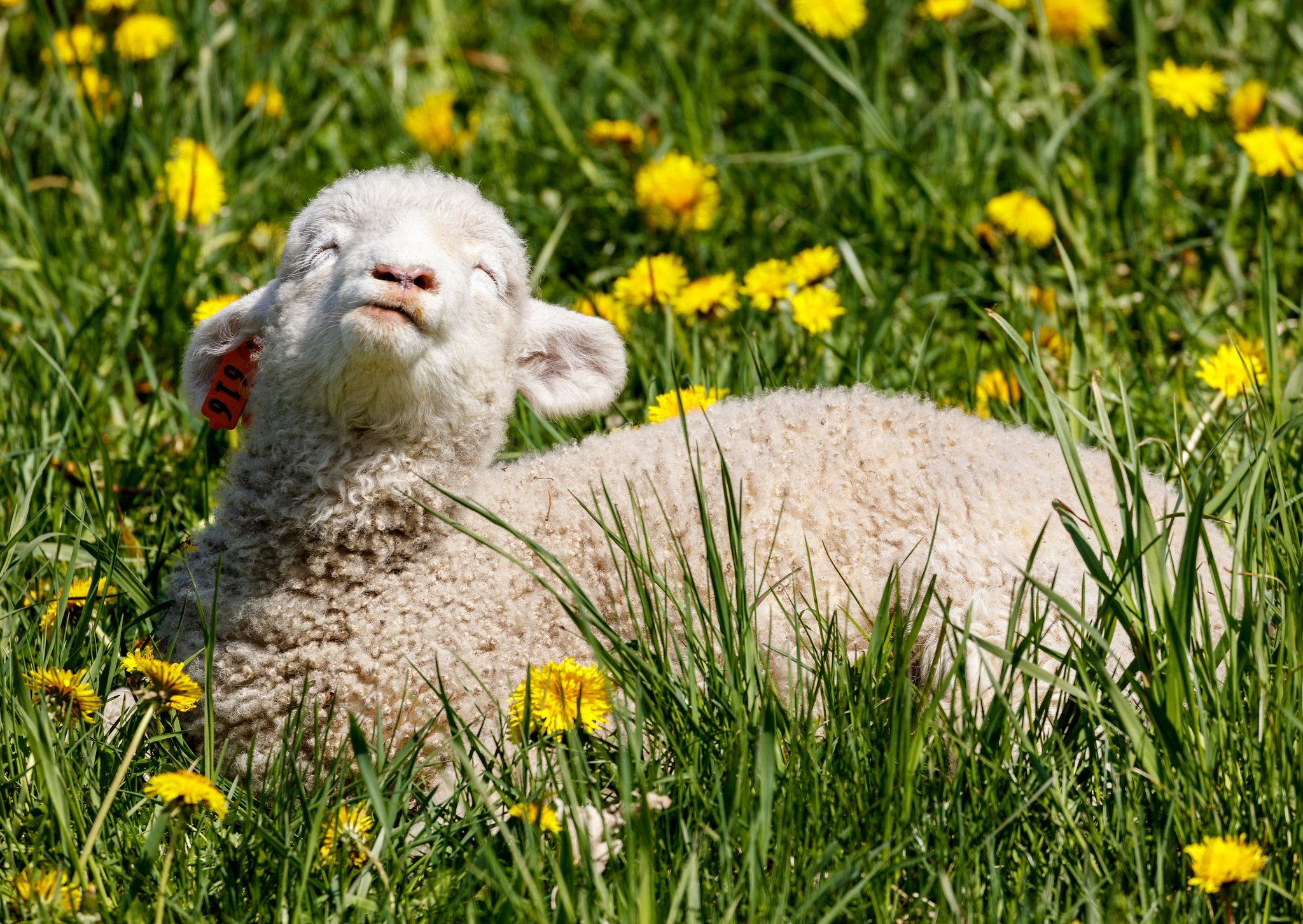
March brings maple sugaring, our most intensive agricultural season. Sap runs from hundreds of tapped trees to our sugarhouse. Steam billows from the evaporator. Groups can participate in or observe the entire process. April and May bring mud season (dirt roads can be challenging) but also the emergence of spring: sugarbush greening, lambing season, early vegetable planting.

Winter (January)
Snow covers the campus. Trails become snowshoe routes. The sugarbush stands bare, waiting for spring tapping. Indoor spaces take center stage as temperatures drop below freezing. Wood stoves and central heating keep buildings comfortable. This season attracts groups seeking intensive indoor work time with dramatic winter scenery visible through windows. Cross-country skiing is possible most years.
Fall (September - October)
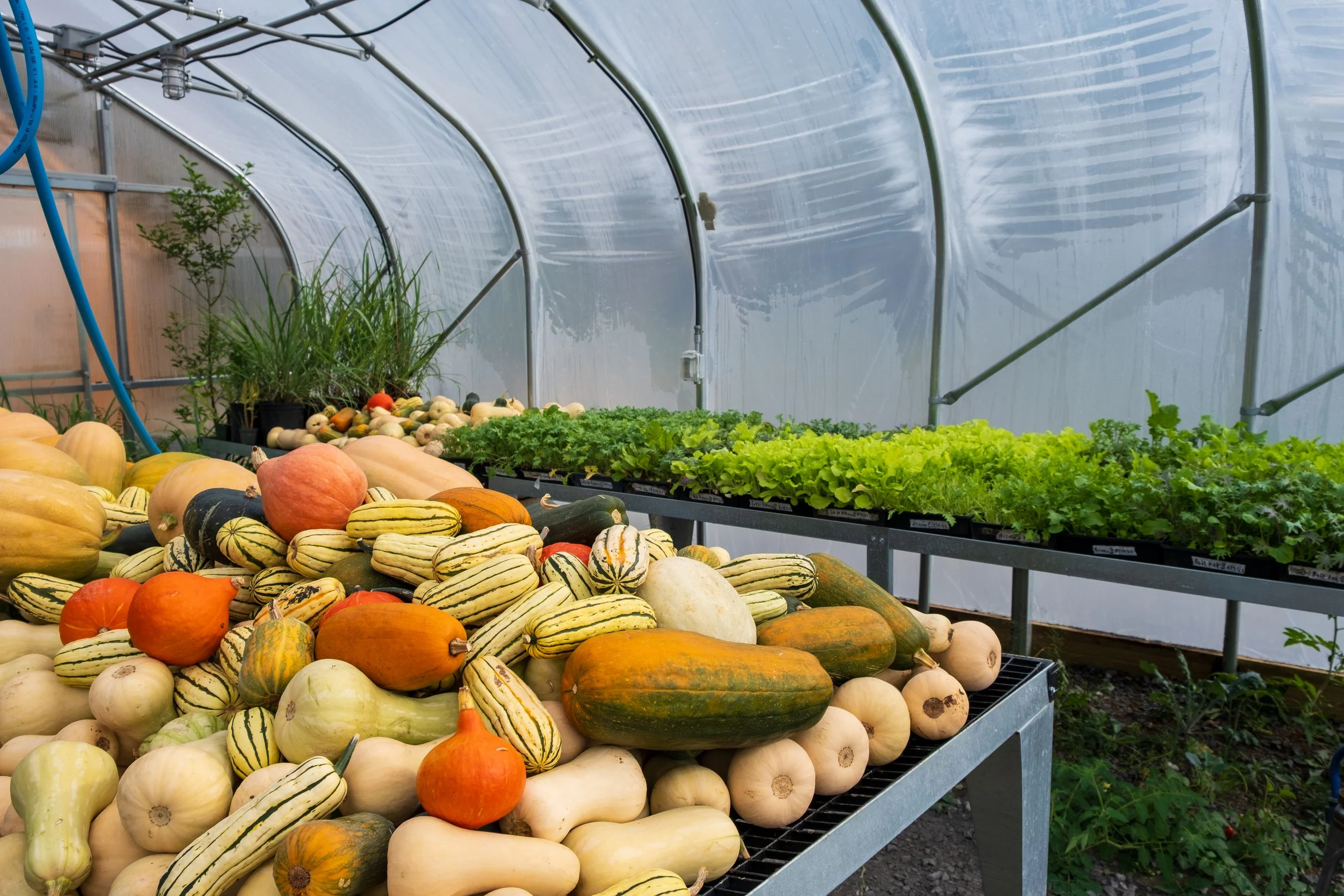
Foliage season transforms our campus into what Vermont is famous for: brilliant reds, oranges, and yellows covering our forests and surrounding hillsides. Harvest continues with apples, winter squash, and late-season vegetables. Cooler temperatures make hiking ideal.
Experience the Campus Yourself
The best way to understand whether The Mountain School is right for your group is to visit. Schedule a tour with our rental coordinator to walk the property, see the facilities, and envision your group's experience here.

Ready to Plan Your Stay?
Explore pricing, accommodations, and availability for educational groups, corporate retreats, and family gatherings at the Mountain School.
Contact
151 Mountain School Road
Vershire, Vermont 05079
Typical response time: within 1-2 business days