
Elizabeth Lowenhaupt F91: Child Advocacy and Justice
Dr. Lowenhaupt F91 returned to campus this past fall to share with the TMS community her journey from that meaningful experience 34 years ago to her current roles, as well as how she continues to consider the importance of learning, community, interpersonal relationships, and system change throughout her career in academic medicine, carceral health care, and advocacy.
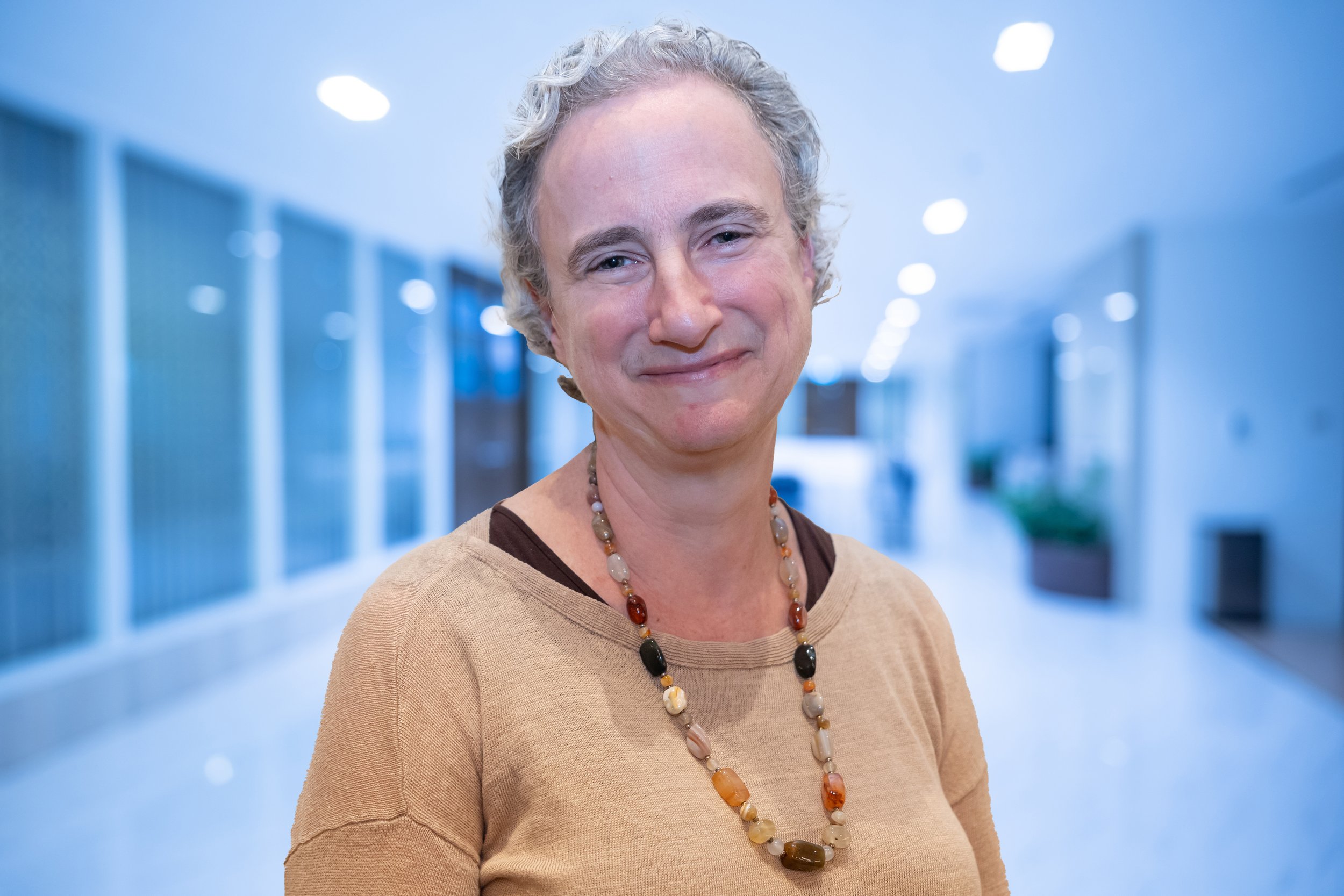
Elizabeth A. Lowenhaupt, MD, a pediatrician, psychiatrist, and child psychiatrist on the faculty at Brown Alpert Medical School, currently serves as the director of the child forensics and juvenile legal system service line at Brown University Health in Providence, Rhode Island. Dr. Lowenhaupt has conducted most of her clinical work within the child welfare and juvenile justice settings, currently working as consulting medical and psychiatric director at the Rhode Island Training School, the state's only juvenile correctional facility, and as founder and director of the HOPE for Justice Clinic. Dr. Lowenhaupt was a F91 TMS student and returned to campus this past fall to share with the TMS community her journey from that meaningful experience 34 years ago to her current roles, as well as how she continues to consider the importance of learning, community, interpersonal relationships, and system change throughout her career in academic medicine, carceral health care, and advocacy.
Profile by Elle Canarick F25
On October 3, Elizabeth Lowenhaupt came up from her home in Rhode Island to give a presentation to the students about her work as a psychiatrist within juvenile correction centers. I found that the presentation was full of great life advice and knowledge of working within a difficult system, and students walked away feeling well-informed about how Elizabeth and her colleagues help the incarcerated teenagers within their care. I had the privilege of sitting down with her the following day to learn more about Elizabeth’s busy life.
Elizabeth’s job bears little resemblance to what she envisioned as a student in the fall of 1991 at the Mountain School. As she developed a connection with the world around her at TMS and began feeling responsible for the places she inhabited, she believed she would become a scientist specializing in climate change. In college, she majored in environmental science and public policy, as well as graduating with the pre-med requirements.
Elizabeth began to focus on child psychiatry at the University of Missouri School of Medicine and was drawn to the practice because she felt she could connect with her patients on a much deeper level than within other medical fields. She appreciated how much she could see her help affecting her patients, and how well she got to know them; she saw the importance of “helping them maintain hope” throughout a vulnerable time in their lives. As a result of her training and certifications, she can diagnose and give medication to those with mental illness. She attempts to help them improve the circumstances of their lives and especially values the opportunity to be “an adult who thinks they’re worth it and can do what they want to do with their lives.” Her passion for making a difference has only grown stronger over time.
After med school, Elizabeth entered a combined residency in pediatrics, psychiatry, and child and adolescent psychiatry, also known as “triple board” at Brown University Medical School. Following her residency, she began working with boys at a residential treatment facility in Rhode Island, where she continued learning from mentors. Her first supervisor was highly experienced and willing to share her wisdom. She always listened to Elizabeth’s ideas, and provided feedback even when the answer was “no”. When her mentor left to take a job at the state, Elizabeth stepped into a position that allowed her to continue working with that mentor as the consulting psychiatrist at the state training school, a place where she still consults today.
Elizabeth is on the board of the National Commission on Correctional Facilities, participating in making recommendations for juvenile detention centers all over America. She attempts to improve the treatment of incarcerated teenagers by increasing the standards of care and acknowledging what is not possible. Particularly, she and her colleagues fight for a minimum age of incarceration and to remove teens from restrictive status, a punishment that prevents incarcerated people from having contact with anyone inside or outside the center for most of the day. However, she understands why this status exists, and acknowledges others’ perspectives. Detention centers are not required to follow the national guidelines, but Elizabeth continues to try to convince them.
Elizabeth has two children, many different jobs (not all listed above), and a great deal of experience juggling them all. She’s learned what to value the most, and what balls can be let go—she’s always working towards something, but has accepted that she cannot do everything. She is passionate, and motivated, and cares deeply about everything she does.