
Get off the Damn Track
The Mountain School, Walden Pond, and the value of a detour
by Kate Cohen, Parent F16, F18, F21
This piece originally appeared in Scratch, a column that celebrates human agency in a culture awash in cheap consumer goods and A.I. It's about creating — instead of buying or simply accepting — the stuff, nature, and purpose of our lives. This post has been edited for length. You can read the original post by Kate here. The illustration in this piece is by Rose Robinson F18.
The rule in the dining hall at The Mountain School is that each seat at a table must be filled before you can sit down at an empty one.
Think about that for a minute — and think about the last time you stood, tray in hand, surveying a room and making your social calculations. This one simple rule dispenses with all of it.
The Mountain School, a semester program for high school juniors, offers students an unusually “scratch” educational experience. It’s a working farm in rural Vermont, where students join faculty and staff in tending livestock, planting and harvesting crops, preserving produce, sugaring maples, pressing cider, and chopping wood. Students help make their own food and heat; their chores make their dishes, classrooms, and bathrooms sparkle.
But animating the school, and embodied in that dining hall rule, is a whole other kind of scratch. The kind where you look at the way things are usually done and you decide to do it differently. Education, community, daily life — these are all things we create.
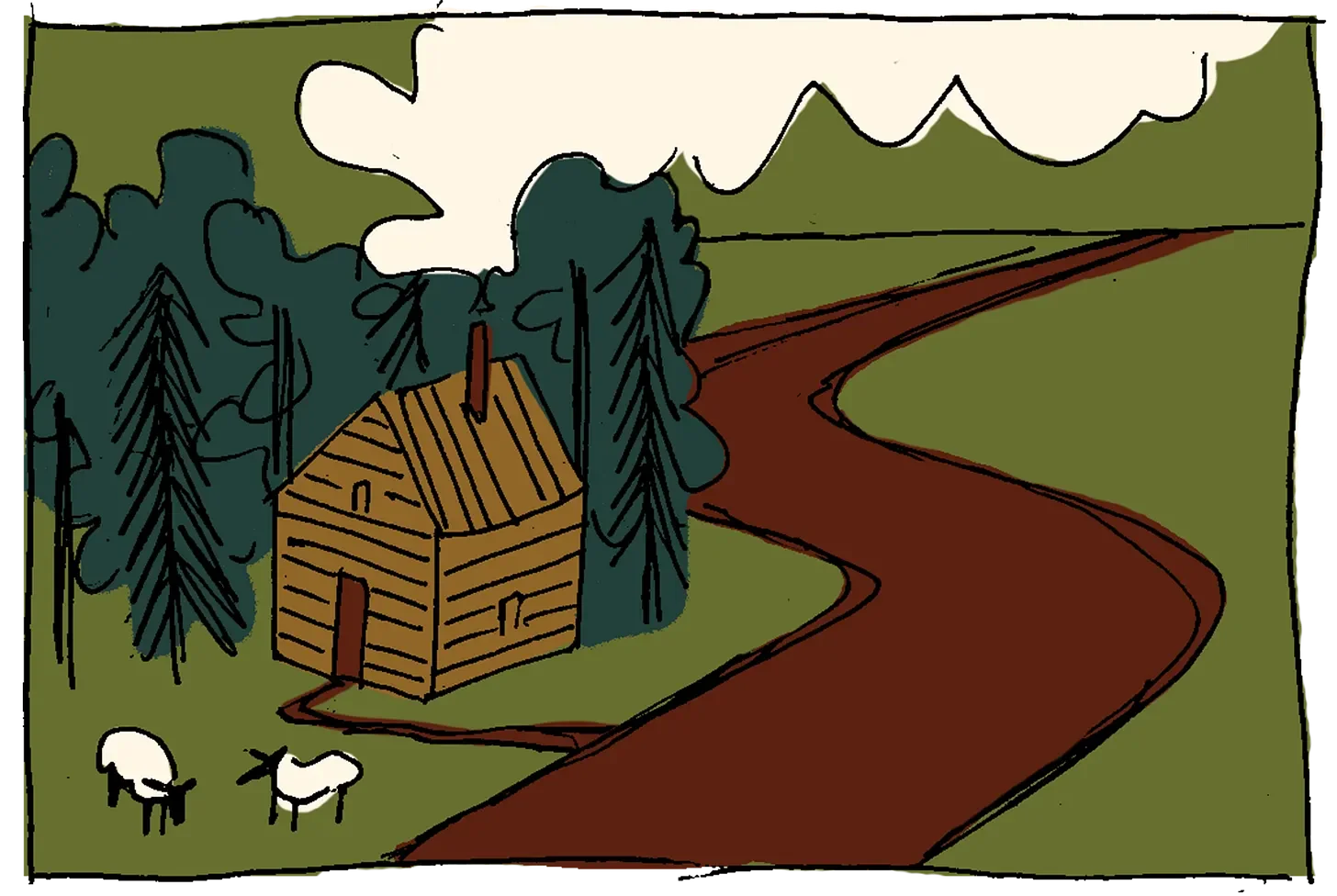
What if we tried to make them better?
I know about The Mountain School because our children each went there — each, for the first time in their lives, departing from the expected path.
Admittedly, it wasn’t very far off the path.
In Walden, Henry David Thoreau proposes that students would learn more by doing than by studying. “How could youths better learn to live than by at once trying the experiment of living?” he asks:
“Which would have advanced the most at the end of a month — the boy who had made his own jackknife from the ore which he had dug and smelted, reading as much as would be necessary for this — or the boy who had attended the lectures on metallurgy at the Institute in the meanwhile?”
Given its cohort of college-bound achievers, The Mountain School doesn’t have the latitude to swap AP Physics for smelting. Environmental Science and Food Systems classes both make use of the school’s forest and farm, but otherwise, academically speaking, it’s just an excellent high school, carefully calibrated to deliver students back to their home schools intact. It doesn’t try to reinvent the curriculum.
But everything else about high school in America is up for debate. What if students sat with their classmates basically at random? What if, after they ate, they cleaned up after themselves? What if we expected teenagers to shoulder the burdens of their community?
Alex Myers, the school’s Director, told me when I visited in May that many students arrive having been taken care of all their lives. Ours too, I’m embarrassed to say: They did what they were asked, but we didn’t ask much. At The Mountain School, Myers said, “It’s shared work. And they learn that from day one.” He used to teach at Phillips Exeter Academy, he said:
And there, the students were rewarded only in certain avenues, like captain of a team, president of debate, a straight-A student. ... But here, you’re gonna get just as much respect from peers and faculty if you can wash a dish, sweep the floor, care for an animal, as you will if you can ace a math test.
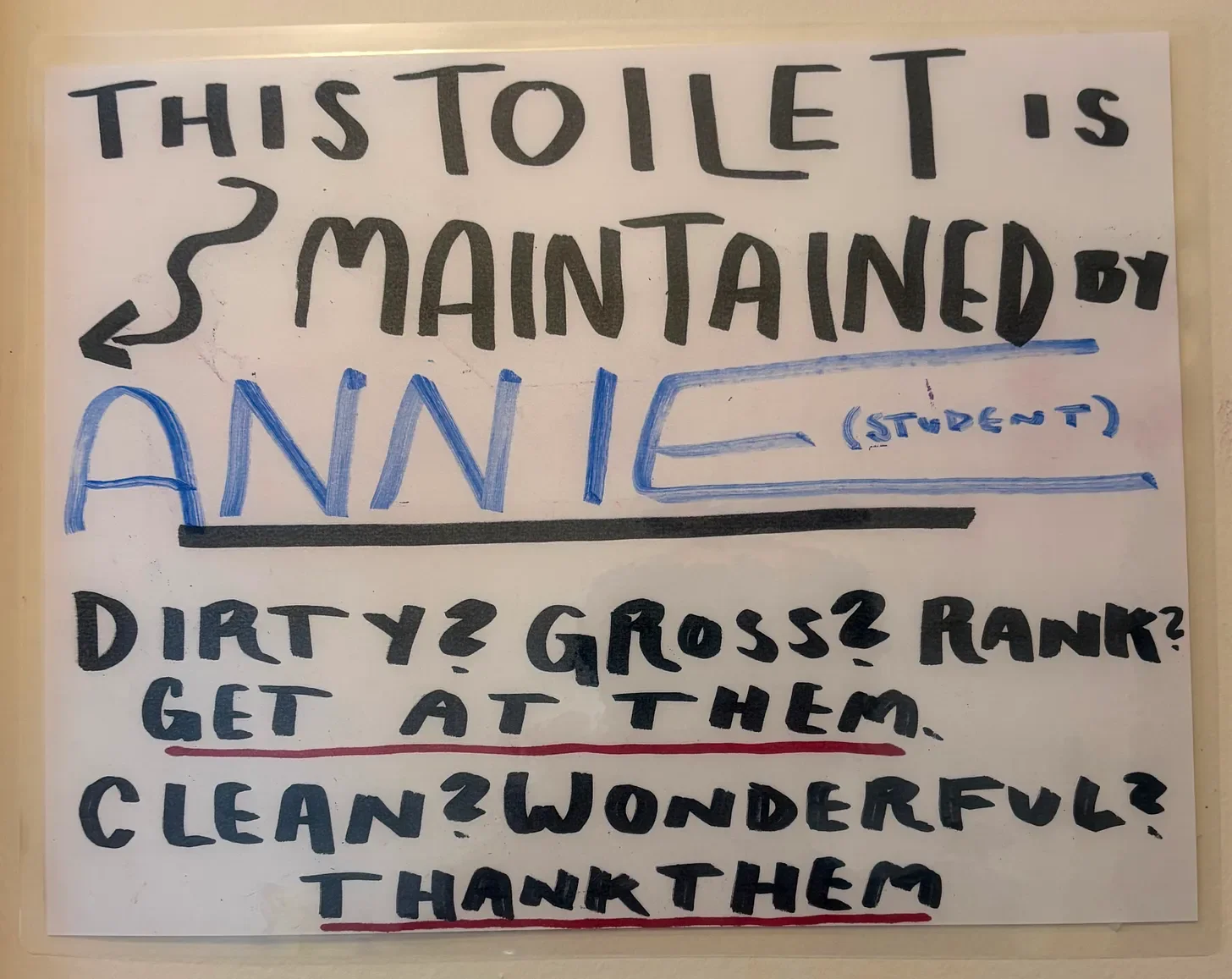
To protect this undivision of labor and the values it promotes, the school limits the incursions of the outside world. Cell phones are forbidden; WiFi is turned off at night; laptops aren’t allowed in the dorms.
“If you find yourself going in the wrong direction,” Myers told me, “no problem, course correct, because every semester you start anew.” What faculty, staff, and even students themselves to an extent are left with is the freedom to decide — thoughtfully, intentionally, with a spirit of experiment — how to live.
More than once recently when I told someone I was (finally) reading Walden — surely an essential work in the Scratch canon — they informed me that Henry David Thoreau didn’t do his own laundry. His mommy did.
It’s a strange critique, given that Thoreau (1) doesn’t pretend to be a survivalist removed from human contact and (2) exhibits both skill and industry — from homebuilding to crop tilling to furniture making to land surveying to minutely observing and recording the ecology around Walden Pond — far beyond anyone I know. Okay, so he didn’t wash his clothes. Have you built a chimney out of pond stones?
The Laundry Indictment expresses more than reflexive suspicion of famous dead white men; it insinuates that Thoreau wasn’t what he pretended to be. Worse: that he wasn’t what he argued we should be. He champions a life of simplicity, declares his love of solitude and nature, sees infinity in his small patch of borrowed land, and then abandons the whole project after just two years. He didn’t leave civilization; he went for a long walk.
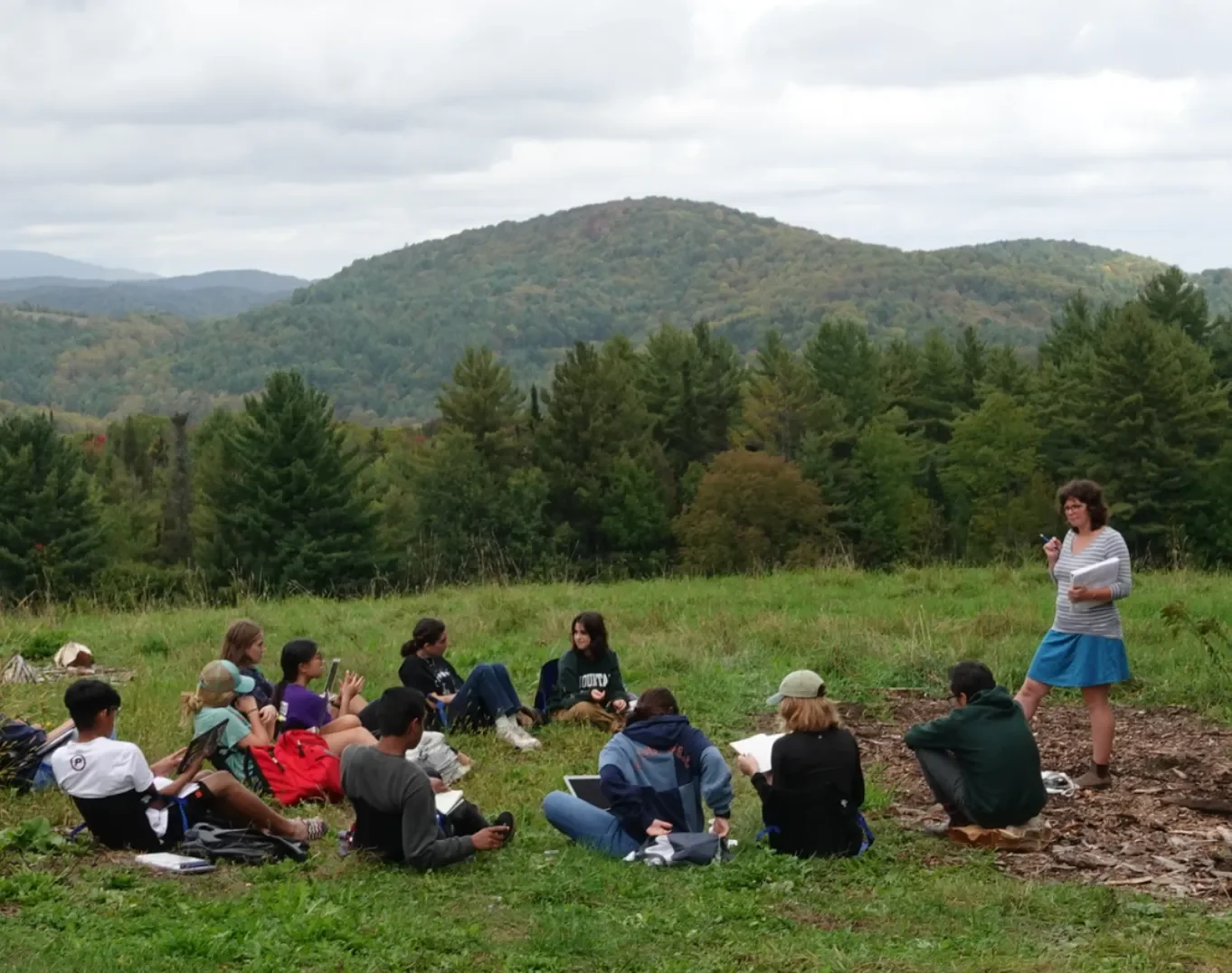
But is it really worse to live your convictions imperfectly and temporarily than not at all?
In addition to being the Director and a dorm parent and, you know, window cleaner when it’s his turn, Myers teaches English. When they get to Thoreau and the Transcendentalists, his students, “love to talk about whether this place is a wacko cult or not,” he said.
“Are we doing something real? Are we doing make-believe?” — “Are we just rich kids whose moms are doing our laundry?”
I offered — “Right. And I try to time it with Solo to be like, you’re going to go out for four days and three nights. That is not forever. And you’re not survivalists. We’re giving you as much ramen as you can carry. And yet, I would still say that is a profitable venture.”
You could make a similarly modest claim about the entire semester. It’s still a profitable venture even though it’s just a few months, a blip in a student’s life before they become, as Thoreau would say, “a sojourner in civilized life again.”
Brevity does not invalidate the experiment. In fact, it might be a necessary precondition — practically, since the school exists precariously within the system it questions, but in another way too.
Ever since we brought our first child home from The Mountain School, I’ve wondered how the school creates a community out of 45 strangers in such a short time. What’s the trick? I asked Myers. But I had it backward. The students choose to connect because the time is so brief, he said.
“They come in knowing it won’t last forever. It’s just this moment.” So what does last?
Here are a few things my kids, my cousins, and Rose told me they learned at The Mountain School:
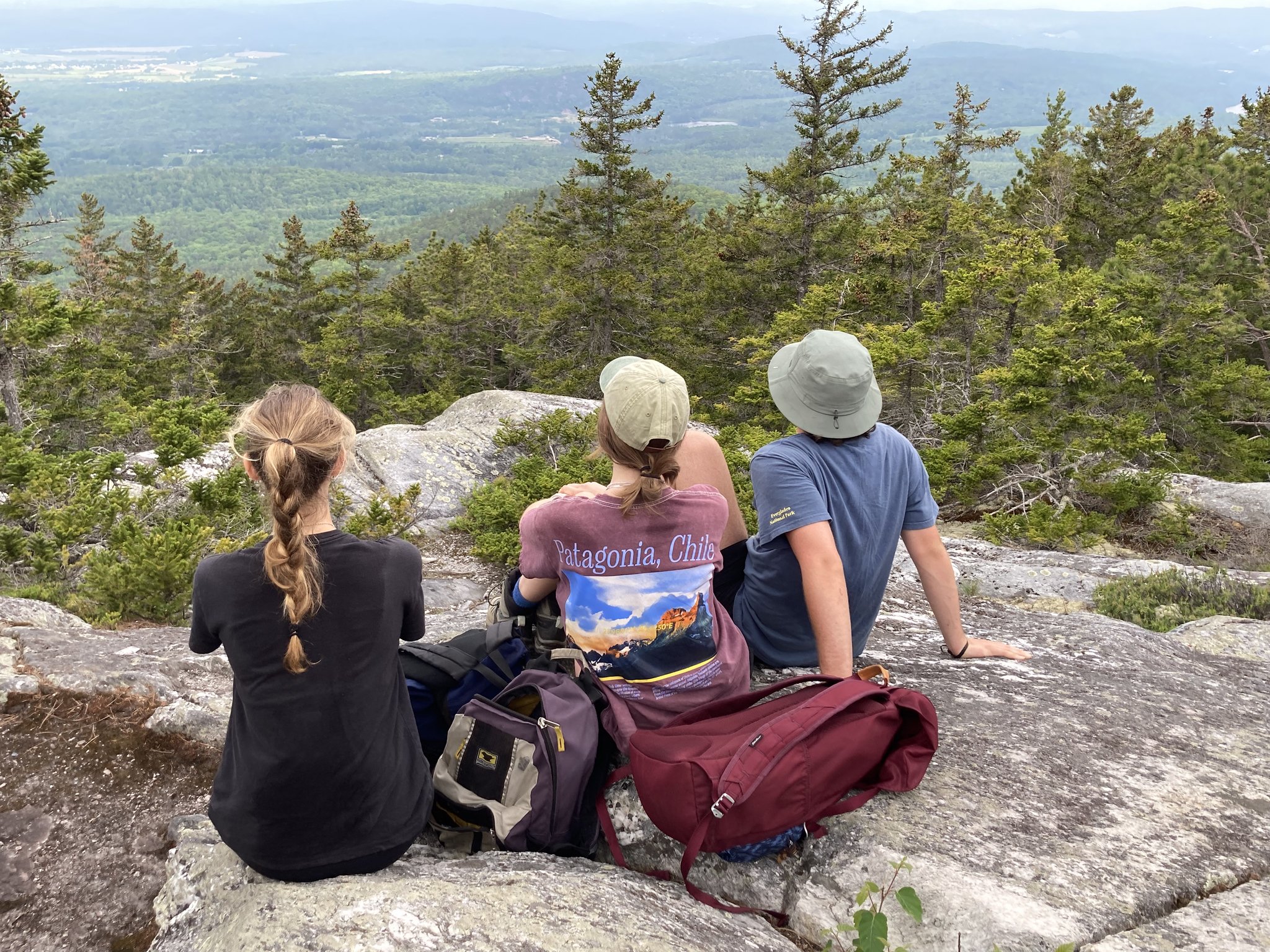
How to fell a tree and split wood.
How to make friends, and how to be a friend.
How to move cattle and install fencing.
How to be alone (as in away from family) but also alone (as in completely, during Solo).
How to load a dish sanitizer and sweep with a push broom.
How to make female friends after having had only male ones, and vice versa.
How to use a compass and put up a hammock and tarp.
How to memorize poems.
How to keep in touch with people from afar.
How to get oneself up in the morning.
How to write.
Not bad for a few months.
For all his pronouncements about how every man should build his own house and how having five dishes to choose from is better than 100, and so on, Thoreau did not expect his readers to live in a small house by a pond.
I would not have any one adopt my mode of living on any account; for, beside that before he has fairly learned it I may have found out another for myself, I desire that there may be as many different persons in the world as possible; but I would have each one be very careful to find out and pursue his own way, and not his father’s or his mother’s or his neighbor’s instead.
Explaining why he left the woods, Thoreau writes, “It’s remarkable how easily and insensibly we fall into a particular route, and make a beaten track for ourselves.”
So if you’re considering life in a van or a foreign country or without plastic or as a World Central Kitchen volunteer but you’re not sure about doing it forever, that’s fine. Maybe even good. The point isn’t to pick a new path and never deviate. The point is, even for a little while, to get off the damn track.
Kate Cohen is a former Washington Post contributing columnist and author of We of Little Faith: Why I Stopped Pretending to Believe (And Maybe You Should Too), which chronicles her journey to outspoken atheism and argues that nonbelievers should be more vocal. She has been honored with the Freedom from Religion Foundation's "Freethought Heroine" award, and was selected to give the keynote address for the inaugural Congressional Reason Reception in Washington, D.C. She now writes a column called Scratch, which celebrates the stubborn human desire to make (rather than buy or simply accept) the stuff, purpose, and meaning of our lives. She lives with her husband on a hay farm in Albany, New York. Their children are TMS alums Noah (F16), Jesse (F18), and Lena (F21).
Rose Robinson F18 is an artist working in ceramics and illustration. She investigates play as a path towards story, and story as a path towards meaning. Rose’s work has been included in exhibitions at Gallery 263 in Cambridge, Mass.; Charlie Cummings Gallery in Gainesville, Fla.; and the University of Southern Mississippi Museum of Art, among others, and she has participated in residencies at Watershed Center for the Ceramic Arts in Edgecomb, Maine, and Fish Factory Creative Center in Stöðvarfjörður, Iceland. Rose is a graduate of Middlebury College with her degree in Studio Art and is beginning post-baccalaureate studies in Ceramics at The University of Colorado Boulder.
